
Coral Springs Previous Resident Sources
The right starting source depends on the age of the parcel and house. BCPA provides today's owner and recent sales. Broward Official Records carries the legal transfer trail. City permits can date construction and alterations, while directories, newspapers, probate, and obituaries help distinguish an owner from the people who lived there. Coral Springs was chartered in 1963, so the federal census available through 1950 usually describes predecessor land or nearby communities rather than a later-built city home.
| Source | Years It Covers | Where Held | What It Shows |
|---|---|---|---|
| Official Records, full online | July 7, 1977 to present | Broward Acclaim | Indexed deeds and public images |
| Limited online segment | March 9, 1972 to July 7, 1977 | Broward Acclaim | Instrument, book/page, and date routes |
| Earlier deed books | Before March 9, 1972 | Search and Copy Services | Owners and legal land transfers offline |
| Directories and telephone books | Post-1963 relevant; exact runs unverified | Broward Library and local repositories | Address-arranged occupant and phone leads |
| Federal census | Public through 1950 | NARA and Ancestry Library | Pre-city households and nearby geography |
| Permits and development records | Mainly 1960s forward; web cutoff unpublished | Coral Springs | Construction, applicant, contractor, and work dates |
This era table prevents a common error: treating "not found online" as "no record exists." All plats and maps remain searchable regardless of recording date. For an early development parcel, the subdivision plat and developer deed may be more useful than a census or unverified Sanborn sheet.
Start Previous Residents With BCPA
Search the physical address in BCPA Property Search. Save the folio, owner, mailing and situs addresses, legal description, homestead clue, latest sale, effective age, and building details. The folio is the durable join across map, roll, and recorder records. The legal description matters even more when an address label changes or a subdivision used a marketed name.
Do not turn a mailing-address match into a household claim. The roll proves the owner of record and where the appraiser sends correspondence. It does not identify every occupant. Effective age can also reflect major work rather than the first construction date, so compare it with permits.
Trace Broward Deeds Backward
The current purchase deed names the seller and buyer and repeats the legal land. In deed terms, a grantor transfers an interest and a grantee receives it. To move backward, find the present owner's deed, then search its seller as a grantee in an earlier purchase. Confirm that the legal description stays with the same lot. Similar names alone are not enough.
- Pull the current BCPA owner, folio, legal description, and latest sale.
- Find that purchase deed by instrument, parcel, or party in Broward Official Records.
- Read the image and note grantor, grantee, recording date, instrument, and full legal land.
- Search the seller as an earlier grantee, then repeat while the legal description matches.
- Cross the web cutoff through Search and Copy Services rather than ending the chain.
- Grantor and grantee
- The party giving an interest and the party receiving it.
- Chain of title
- The sequence of recorded transfers tied to the same land.
- Legal description
- The lot, block, subdivision, or other land language that can outlast a street label.
Coral Springs Records at 1:47
Broward marks its recorder transition down to the minute. Limited online search ends July 7, 1977 at 1:46 p.m.; full search starts at 1:47 p.m. Earlier limited access begins March 9, 1972 at 11:28 a.m. Those timestamps describe the system, not the birth or death of a record. A previous-residents project can cross the line through book/page, instrument, date, the counter, or a mailed copy request.
Search and Copy Services does not conduct copy searches by telephone, fax, or email. Visit 115 South Andrews Avenue, Room 114, Fort Lauderdale, or mail a specific request with payment and a self-addressed stamped envelope. Older Official Records media reported at the counter reach back before Broward County's 1915 creation because inherited predecessor-county instruments exist.
Coral Springs Reverses House History
Many house-history projects begin with an old census or fire-insurance map. Coral Springs often reverses that order. The city was chartered in 1963, first residents arrived in 1966, and much of the built city followed. Begin with the subdivision plat, developer deed, BCPA effective age, and permit trail. The public 1950 census can explain the land before development but cannot name residents of a house that did not yet exist.
The city's growth makes plats and folios strong continuity anchors. A subdivision name may carry through changes in postal naming and neighborhood branding. No verified Coral Springs Sanborn sheet was found in the official research, so do not assume one exists. Broward Library access to Digital Sanborn Maps can still be checked for nearby historic municipalities or predecessor geography.
Date Coral Springs Homes With Permits
Permit files add a work chronology that deeds cannot. Search Coral Springs eTRAKiT by the normalized address, then try the parcel or owner where supported. Results may separate permit number, status, work type, site, applicant, contractor, dates, inspections, and disposition. If the public interface does not return an older file, use the open or expired permit request form with the property address, folio, and owner.
Compare permit dates to BCPA's year built and effective age. A large renovation may change effective age without marking the first family at the address. Planning petitions and code cases can add an owner or agent and a hearing or correction timeline, but those roles do not prove residence.
Pair Coral Springs Directories Carefully
Reverse or criss-cross directories arrange entries by street and house number. They can supply an occupant or phone lead between deeds, but exact Coral Springs shelf years and publishers were not confirmed. Ask Broward Library or Special Collections for a year-by-year inventory. Verify the abbreviation key in each volume because householder, resident, spouse, and occupation marks vary by publisher.
- Fix the parcel and address form for the target year with a plat, deed, or permit.
- Check the reverse section for the house number and record the exact printed name.
- Compare the prior and next available volumes for arrival or departure.
- Use a census only when its date and geography overlap the property.
- Confirm the person through a deed, newspaper, obituary, probate file, or other independent record.
The historical collections themselves belong on the Coral Springs city directory page. Here, the volumes serve only as links in one address's backward trail.
Previous Residents in Broward Probate
When a former owner died, a Broward probate case may identify the personal representative, beneficiaries or heirs, creditors, addresses, and filed will. Wills enter this system only after death. Search the Clerk portal first. The written fallback asks for the decedent's full name and date of death, a self-addressed stamped envelope, and a $2 search fee per decedent name.
Review the Broward probate and guardianship channel when the deed chain ends with an estate or representative.
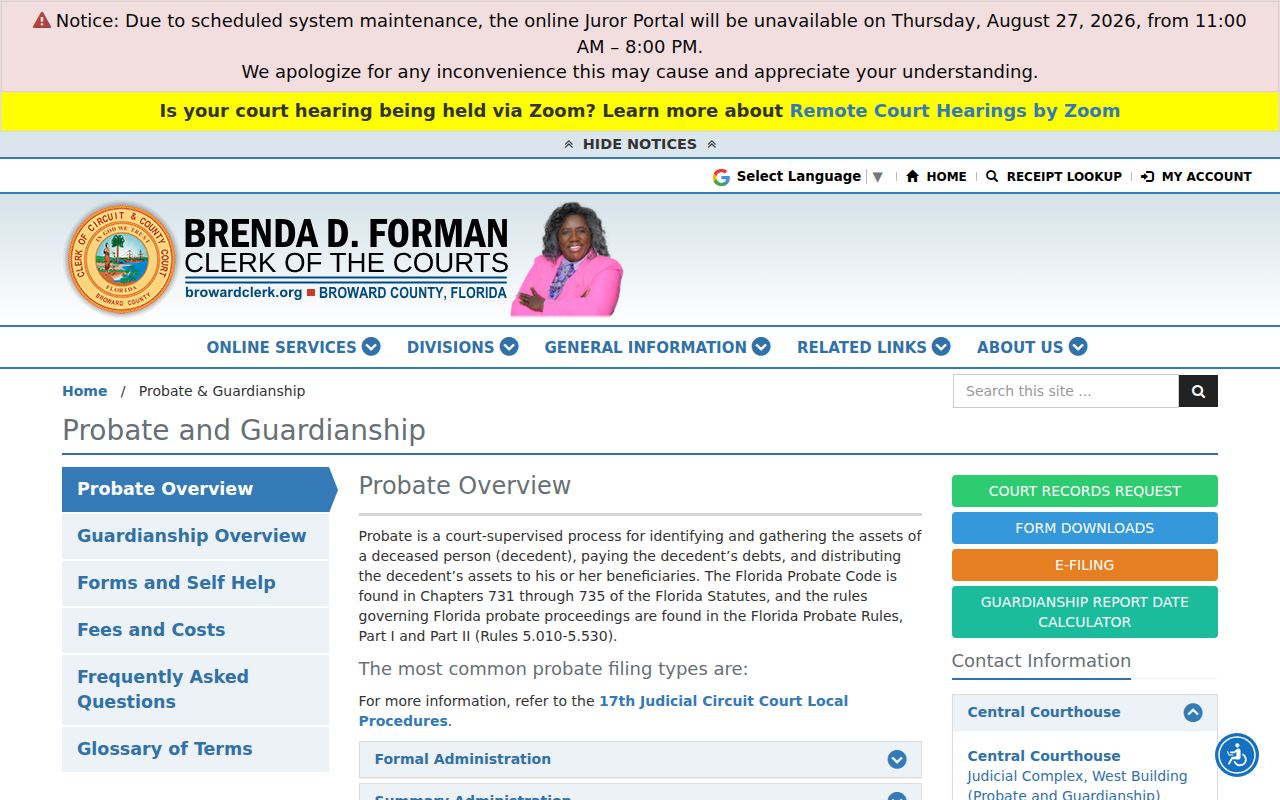
The probate file can connect a deceased former owner to a lawful heir search. It should not be used to infer that every named relative lived at the Coral Springs property.
Request Missing Coral Springs Case Files
An online docket may show a case without every document image. Sensitive, sealed, confidential, or not-yet-digitized material can be restricted. Use the Clerk's records request for public documents that are not available electronically, and ask for the exact case number or party and date range. Clerk copy charges are distinct from recorder charges.
The Broward court records request page provides the fallback.
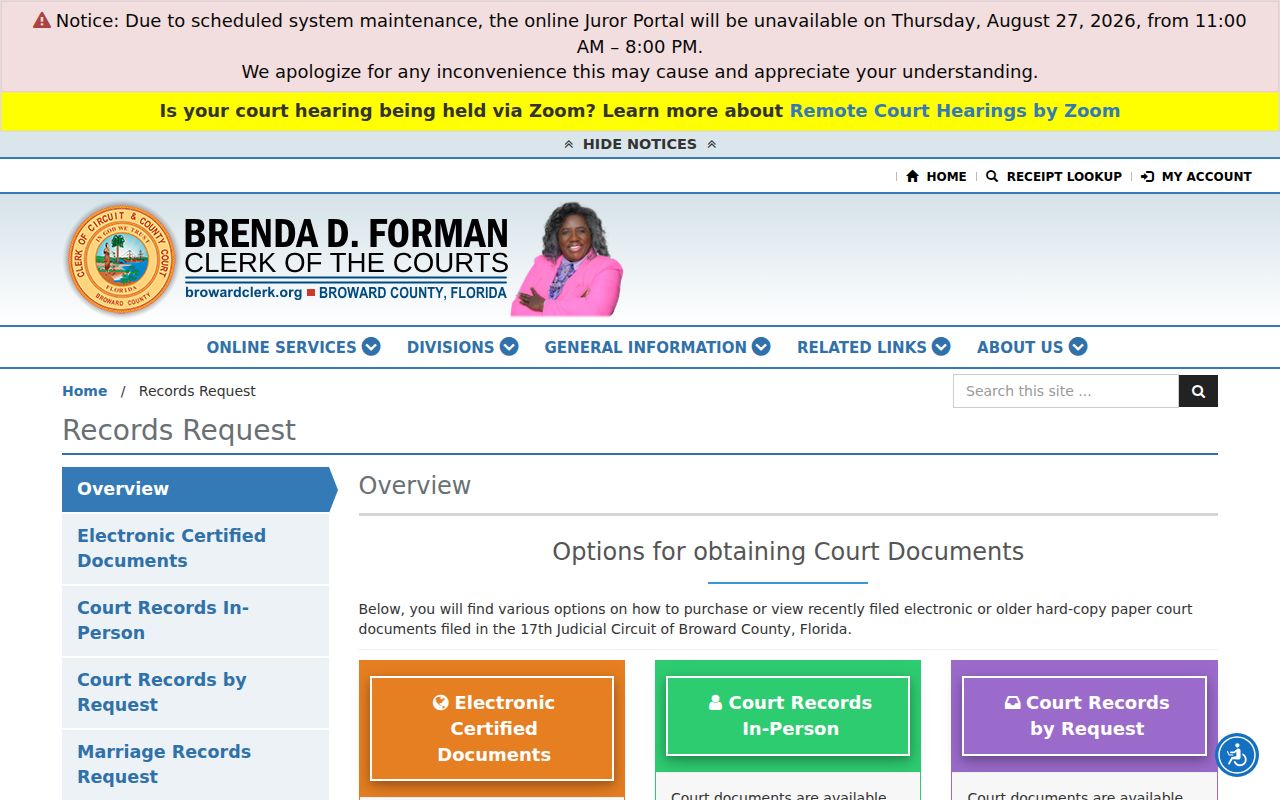
A requested public filing may confirm a representative or disposition, but a docket entry is not proof that the named party occupied the property.
Vital Records for Previous Residents
Vital certificates confirm events, not a full address chain. Florida birth records less than 125 years old are confidential. A death certificate without cause is generally public, while cause of death remains confidential for 50 years except to qualifying relatives or representatives. State marriage and dissolution certifications cover events reported from June 6, 1927 forward. A state divorce certification is an abstract; the Broward Clerk holds the court judgment and pleadings.
Check the official Florida birth certificate rules before ordering.
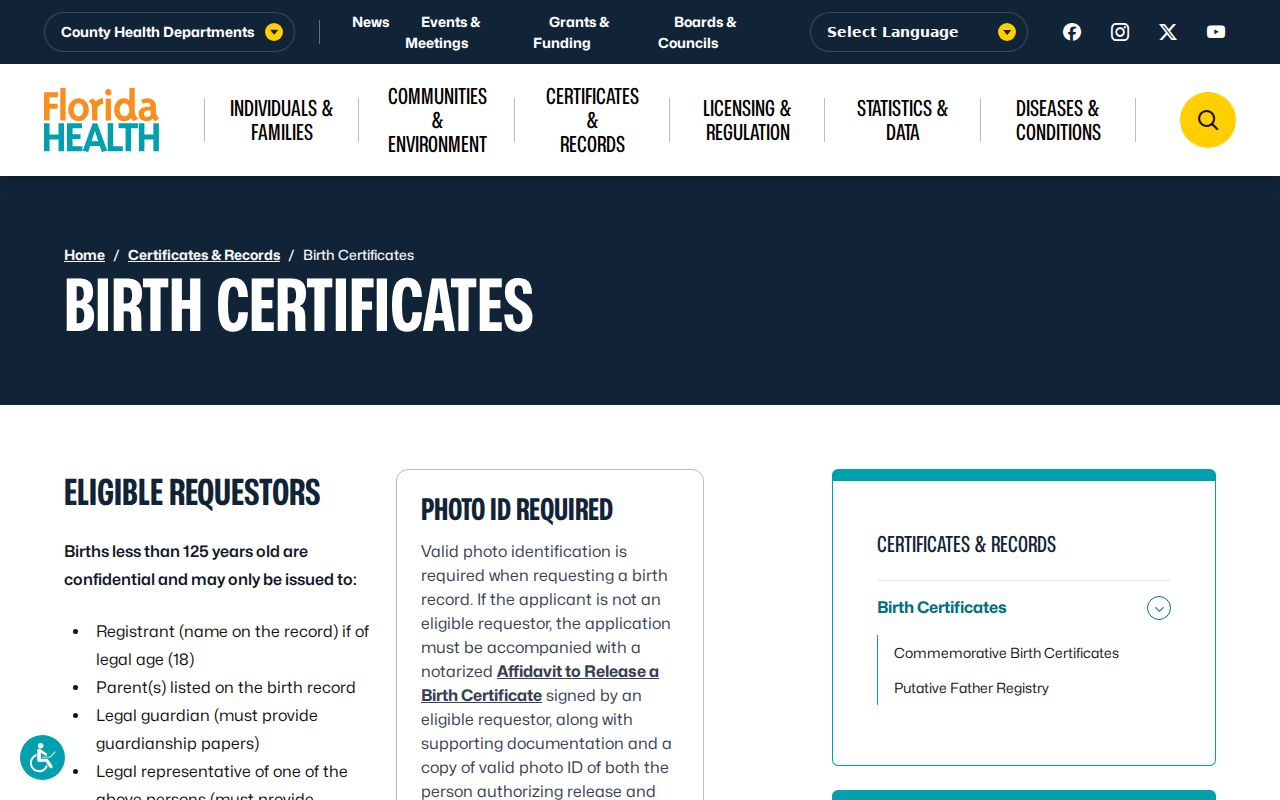
Eligibility and identity documents determine whether a birth copy can be issued.
For a deceased past resident, use the Florida death certificate channel.
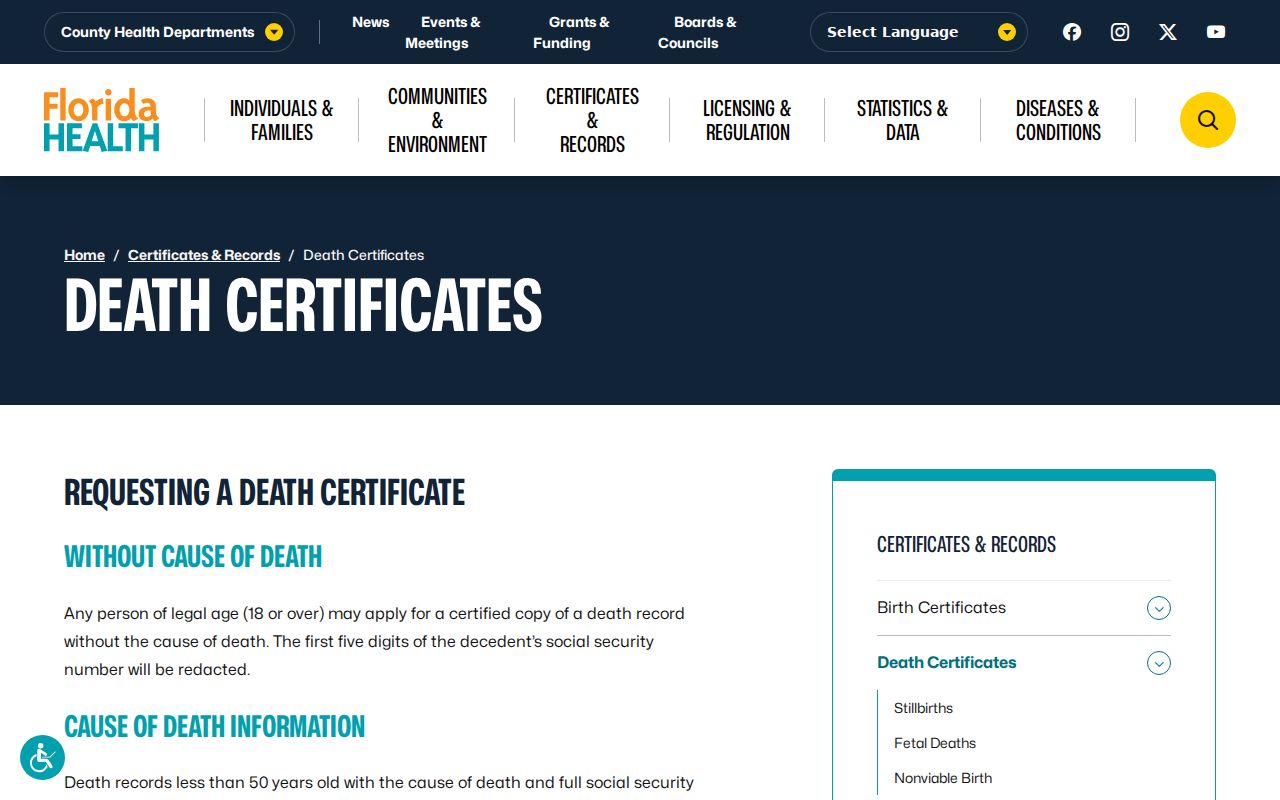
The public without-cause version can confirm identity, date, and place without disclosing protected medical details.
Coral Springs Family Event Cross-Checks
Marriage and divorce records can help separate same-name people or explain a surname change in a deed or directory trail. Use the state certification for the reported event and the Broward Clerk when the underlying license or court file is needed. Never assume that a spouse named in one event occupied the target home without address evidence from the same period.
The Florida marriage certificate page explains statewide certification access.
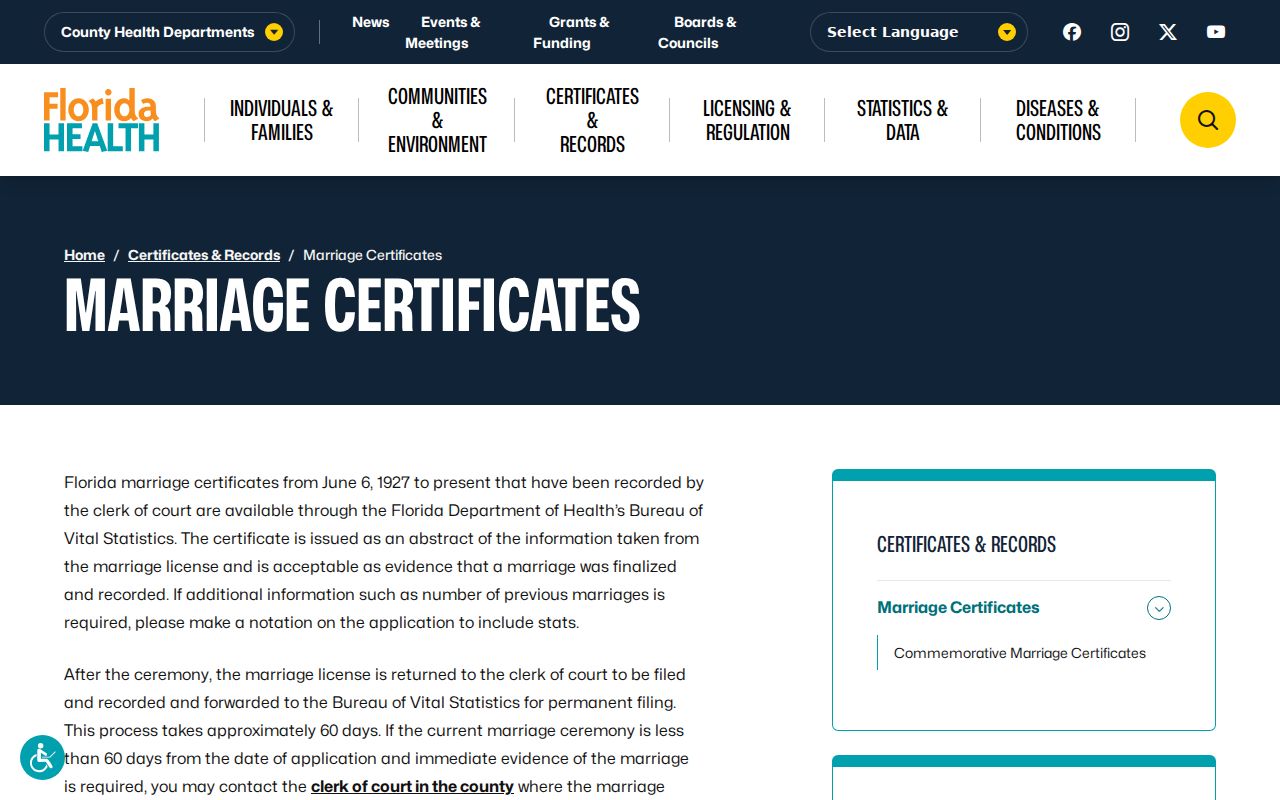
Broward's license record may contain more local detail than the state certification.
The Florida divorce certificate page describes the state abstract.
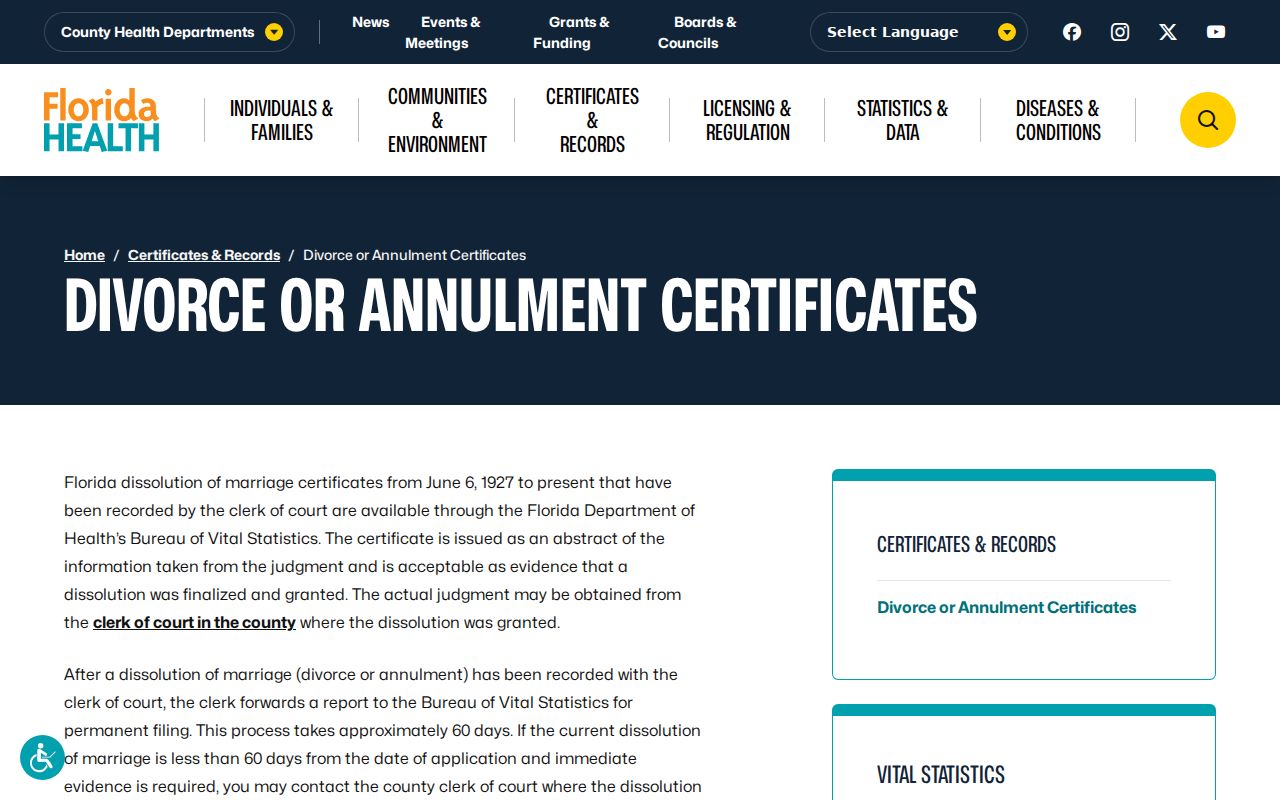
For the final judgment or pleadings, return to the Broward Clerk case file.
Confirm Coral Springs Past Households
Owners are only one layer of previous residents. A reverse directory may point to an occupant, while a newspaper or obituary may supply dates and relationships. Verify those facts through a deed, permit, probate file, vital certificate, cemetery record, or other official source. Obituaries are leads rather than certified records and can preserve errors repeated by family or editors.
Keep a log of the portal URL, query spelling, date range, inspection date, record identifier, and whether an image or only an index was viewed. Record negative searches too. That practice matters in Coral Springs because city, county, and state systems update independently. A BCPA owner, recorder deed, Clerk docket, and vital certificate may describe different effective dates.
The last conclusion should be narrow: who owned the parcel, who appears tied to the address in a dated source, and what remains unknown. That is more accurate than claiming a complete list of everyone who lived there.
Lawful use. Trace Coral Springs previous residents for house history, family history, or lawful personal research. Never use the result to stalk, threaten, or harass a living person.