
Coral Springs Directory Collections
Coral Springs was chartered on July 10, 1963, so its useful directory trail is mainly postwar and regional. There is no verified century-long run of standalone Coral Springs volumes. Broward and Fort Lauderdale telephone books, cross-reference products, library databases, newspapers, property records, and school material fill that gap. Exact shelf years and publishers are not posted in the library's general guide, so ask staff to confirm a volume before planning a visit.
| Collection | Years | Where Held | Access |
|---|---|---|---|
| Coral Springs and Broward directories | Post-1963 local coverage; exact run unlisted | Broward County Library and Fort Lauderdale Historical Society | Catalog search or appointment |
| U.S. City Directories | Varies by publisher and place | Ancestry Library and Fold3 through Broward County Library | Branch or library-authenticated access |
| Reverse directories | Exact Broward years unlisted | Library and local-history repositories | Request a shelf inventory |
| Public census | 1790 through 1950 | NARA and Ancestry Library | Free at NARA; Ancestry in branches |
| Broward Historical Archives | Collection-specific | Broward Library Special Collections | Online, appointment, or scan request |
A missing year should be logged as a coverage gap, not proof that a person was absent. A growing subdivision may have fallen outside a publisher's boundary, a telephone could have been unlisted, or a renter could have been omitted. Record the title, year, publisher, page, spelling, and whether the source was alphabetical or reverse arranged.
The regional scope matters as much as the date. A volume labeled for Fort Lauderdale or Broward may still reach western subdivisions, but that coverage must be checked in the volume itself. Search the catalog under Coral Springs, Broward County, Fort Lauderdale, telephone directory, city directory, and cross-reference directory. If a catalog record is vague, ask whether the item has a geographic coverage note and whether staff can inspect its title page or index before a visit.
Coral Springs Directory Era
The local timeline changes the normal genealogy playbook. Official city history traces Coral Springs to a large farm and cattle tract bought in 1961, followed by chartering in 1963 and the first residents in 1966. The population rose from 1,489 in 1970 to more than 37,000 in 1980. Most present streets and homes therefore have no nineteenth-century household entry waiting to be found.
For an early Coral Springs family, start with a subdivision plat, developer deed, permit, telephone listing, school source, or newspaper. The 1950 census can describe predecessor-area land and nearby communities, but it cannot name the later occupants of a house that did not yet exist. That is the key local story behind the Coral Springs city directory shelf.
Broward County itself dates to 1915, formed from parts of Palm Beach and Dade counties. That boundary history affects older family lines even though it predates Coral Springs. A person tied to the same tract before county formation may be indexed under a predecessor county, while later city-era evidence belongs with Broward custodians. Place and date should always be searched together.
| 1961 | Coral Ridge Properties acquired the development tract. |
|---|---|
| 1963 | Coral Springs received its city charter. |
| 1966 | The first residents arrived. |
| 1970s onward | Rapid growth made deeds, permits, telephone books, schools, and newspapers strong household sources. |
Read Coral Springs Directory Entries
No verified digitized Coral Springs entry was available in the official collections reviewed for this project. The fields below are common directory conventions, not claims about one local publisher. Always read the key printed in the exact volume because marks and abbreviations change.
| Name | Surname and given name, sometimes with a spouse in parentheses |
|---|---|
| Work | Occupation and sometimes an employer |
| Home | House number and street, often preceded by a residence mark |
| Status note | Terms such as householder or widow, depending on the publisher |
| Reverse entry | Street name, house number, occupant, and sometimes telephone |
Copy the entry exactly before expanding it. A spouse's name, middle initial, trade, and employer can separate two people with the same name. An address should then be checked against a deed, property roll, permit, or newspaper from the same period.
- Criss-cross directory
- A directory arranged by street address or telephone number instead of surname.
- Householder index
- A list centered on the person identified with a household at an address.
- Abbreviation key
- The publisher's own list explaining short forms used in that edition.
Coral Springs Library Directory Access
Broward County Library supplies the main local access chain. Its history and genealogy resources include Ancestry Library Edition, Fold3, historic Black newspapers, Florida Electronic Library resources, Broward digital collections, and databases available through the library's arrangement with Nova Southeastern University. Ancestry Library is used in a branch. Fold3 includes U.S. city directories as well as military and naturalization records.
The Broward Library history and genealogy page shows the available research routes.
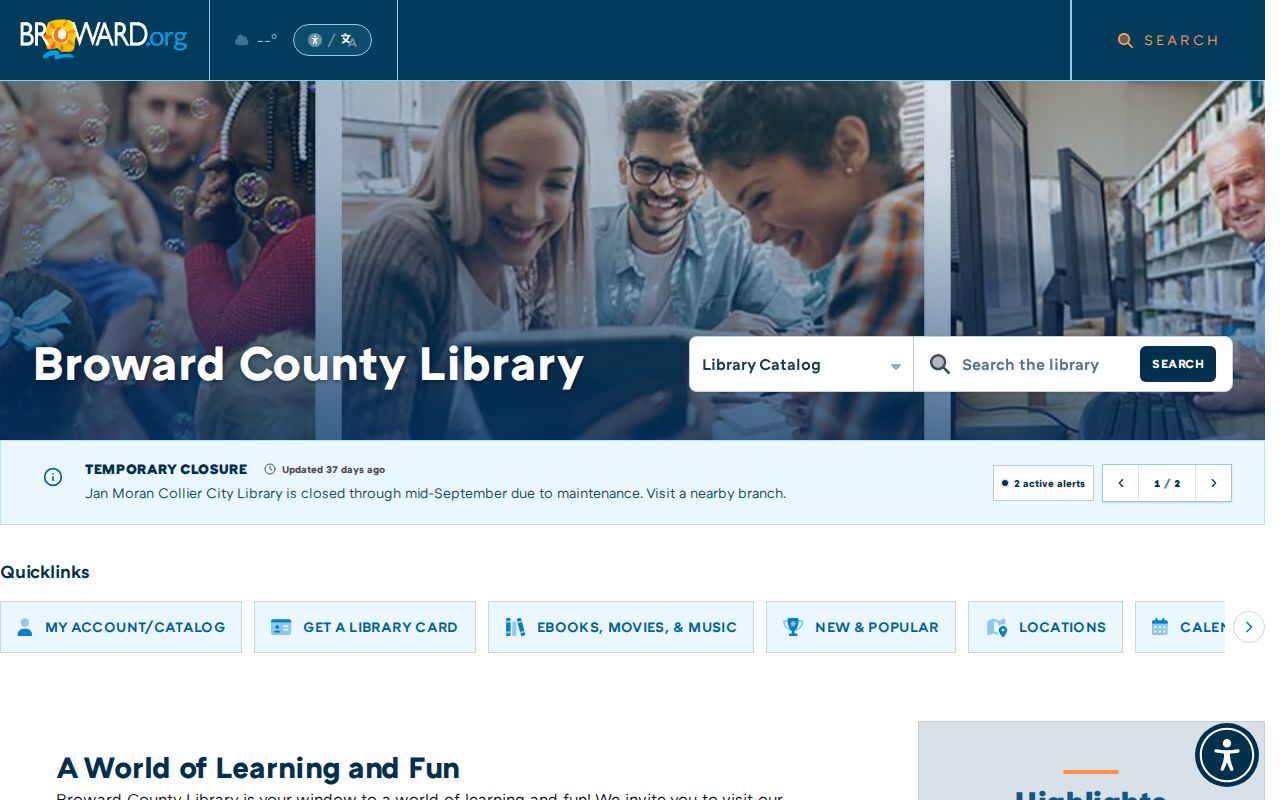
The captured library page helps identify authenticated databases before a branch visit. Ask a librarian for exact Broward or Fort Lauderdale volume years, reverse-directory holdings, format, branch location, and appointment rules. Northwest Regional Library at 3151 North University Drive is a practical Coral Springs starting point, though a special item may be held elsewhere in the county system.
Trace Coral Springs Directory Households
A sound family-history search moves one dated fact at a time. The goal is not merely to spot a surname. It is to show that the name, address, date, and related details point to the same household across independent sources.
- Start with a known year and search the surname, initials, spouse, and common spelling variants.
- Copy the full entry and its abbreviation key, then inspect the reverse section for the address and nearby households.
- Check the prior and next available editions. Mark the first appearance, last appearance, changed work, and changed address.
- Pair a post-1963 listing with deeds, permits, newspapers, or school sources. Use the 1950 census only for older predecessor geography.
- Confirm a modern identity with official records. The Coral Springs resident lookup explains the one-person verification path.
Do not force a smooth timeline when volumes are missing. Write “not found in the available 1978 volume,” for example, rather than “not living in Coral Springs.” That small distinction keeps a family tree from turning a publication gap into a false move.
Arrival and departure dates are best stated as ranges. If a household appears in one available edition and not the prior available edition, the move occurred sometime between those publication dates, unless another record narrows it. A deed records a transfer, a permit dates work, and a newspaper may announce an event, but none should be silently treated as the date every household member moved.
Coral Springs Archive Research
Broward Library Special Collections includes Broward Historical Archives, the African-American Research Library and Cultural Center collections, and the Bienes Museum materials. Researchers may seek a visit or scans. The Bienes Museum is on the sixth floor of Main Library at 100 South Andrews Avenue in Fort Lauderdale and accepts appointments through LibCollectionMgmt@broward.org.
The Florida State Archives genealogy collection adds family files, county histories, church and cemetery sources, census material, and military records.
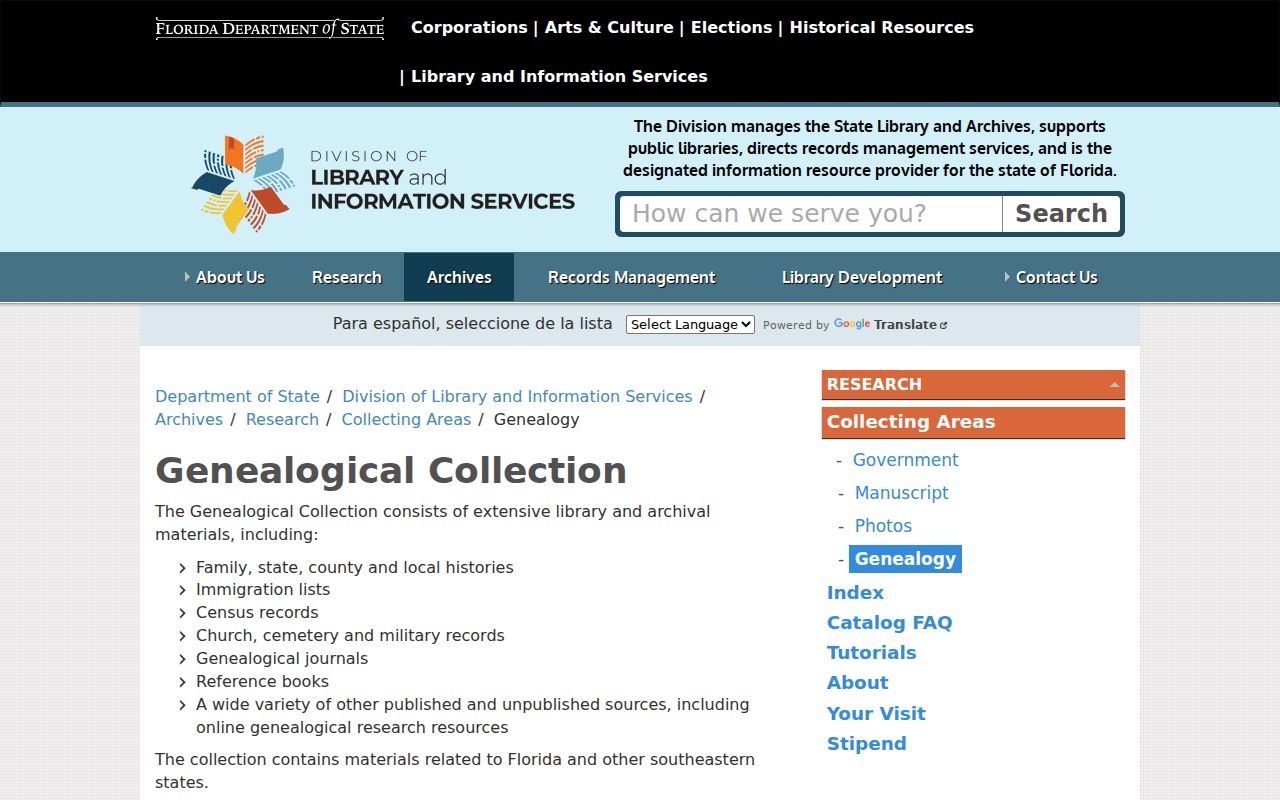
This statewide collection is most useful when a Coral Springs resident came from elsewhere in Florida or when research crosses the 1915 creation of Broward County. For pre-1915 land and court work, also consider predecessor Palm Beach and Dade County geography.
Search Coral Springs Archive Catalogs
Catalog searching works best with several terms. Try the person's name, Coral Springs, Broward County, a school, subdivision, congregation, street, or organization. The Coral Springs Online Archive, city historical materials, and museum sources can add early-resident photographs and planned-city context. They are evidence leads, not certified identity records.
The Florida State Archives catalog gateway searches state and local government material and manuscript holdings.
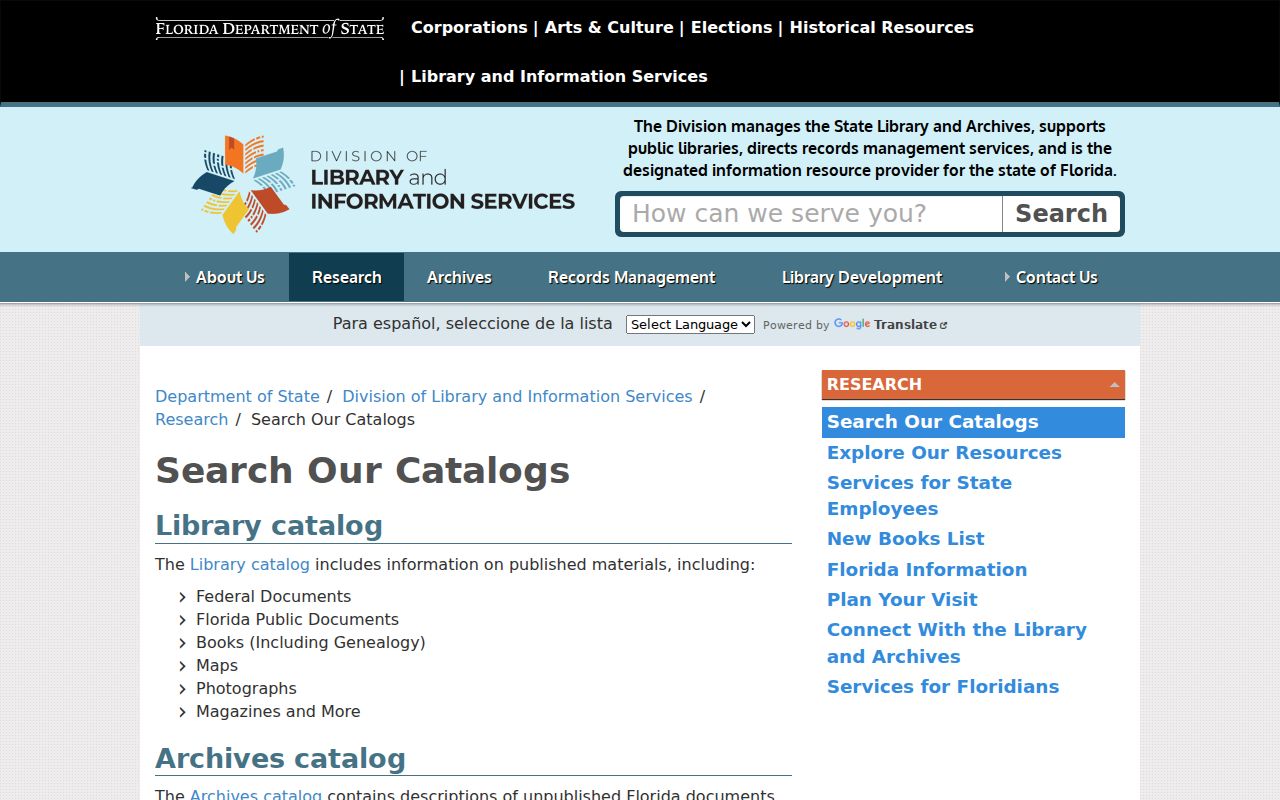
The catalog view shows why a broad web query is not enough. Note the collection name and identifier, then contact the holding office about access, reproduction, and any limits on staff research.
Coral Springs Directory Companions
Yearbooks, newspapers, deeds, permits, obituaries, and association records can test what a city directory seems to say. The original local school began in portable classrooms, and a permanent building opened on November 6, 1972 before becoming James S. Hunt Elementary. School history and yearbooks may therefore supply names and dates for early families when a directory run is sparse.
Southeast Regional Newspapers covers 2008 to recent issues with a three-month embargo. NSU-linked resources include Digital Sanborn Maps and historical newspapers. No official Coral Springs Sanborn sheets were confirmed, which fits the city's late development. Broward Digital Archives reports 115 collections of letters, photographs, books, oral histories, art, and newspapers. Those sources add context, while a deed, court file, or vital certificate answers a different evidentiary question.
When a directory identity leads to a federal case, the PACER service is the official route for Southern District of Florida federal dockets.
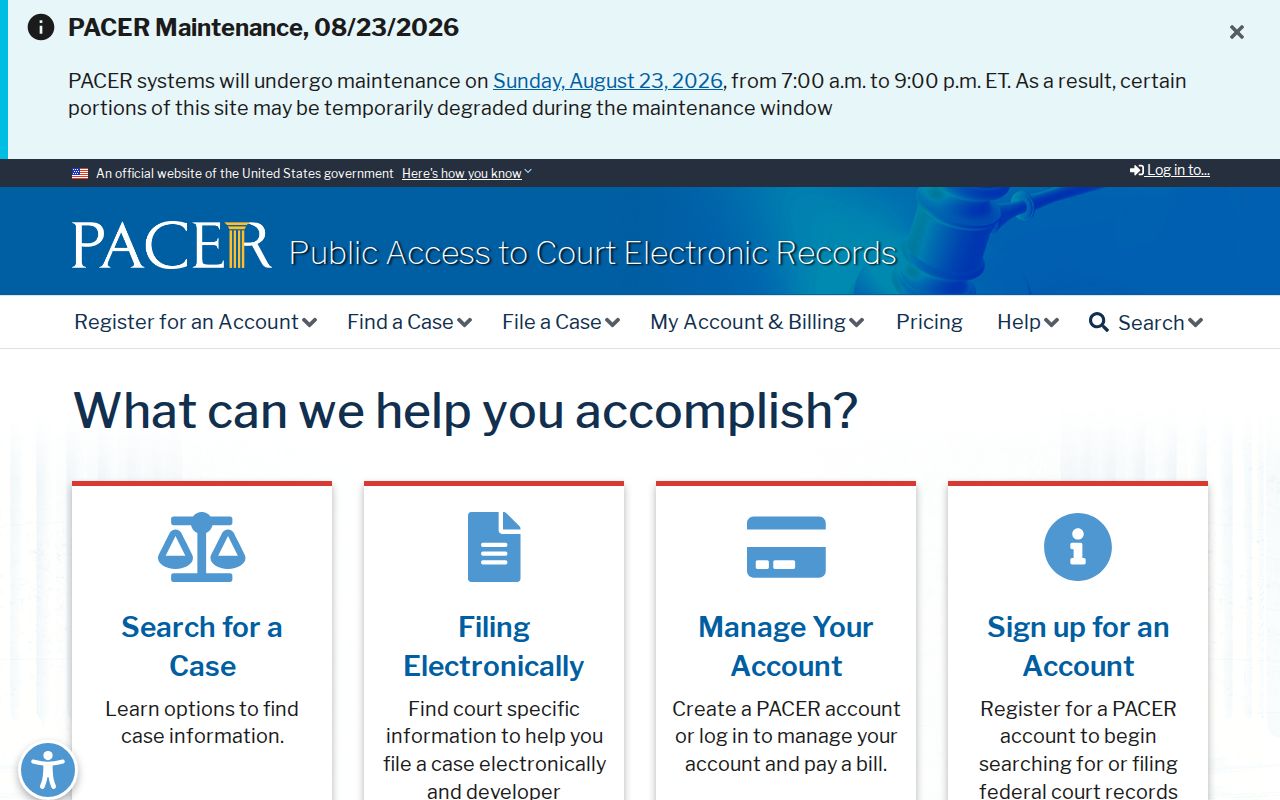
The federal search is a companion check, not part of the city directory collection. PACER charges ten cents per page, generally caps one document at three dollars, and waives quarterly bills of thirty dollars or less under the researched schedule.
Explain Coral Springs Directory Gaps
A missing city directory entry may reflect the source, not the resident. Check publication boundaries, spelling, initials, unlisted telephone status, renter omissions, a new subdivision, or an absent annual volume. Reverse directories can help when the surname index fails, but their exact Broward shelf years require librarian confirmation.
Keep an evidence log with the catalog or portal, exact query, year range, result, and inspection date. Save whether an image was viewed or only an index. That record makes later checks repeatable and prevents “not found online” from becoming the unsupported claim that no record exists.